

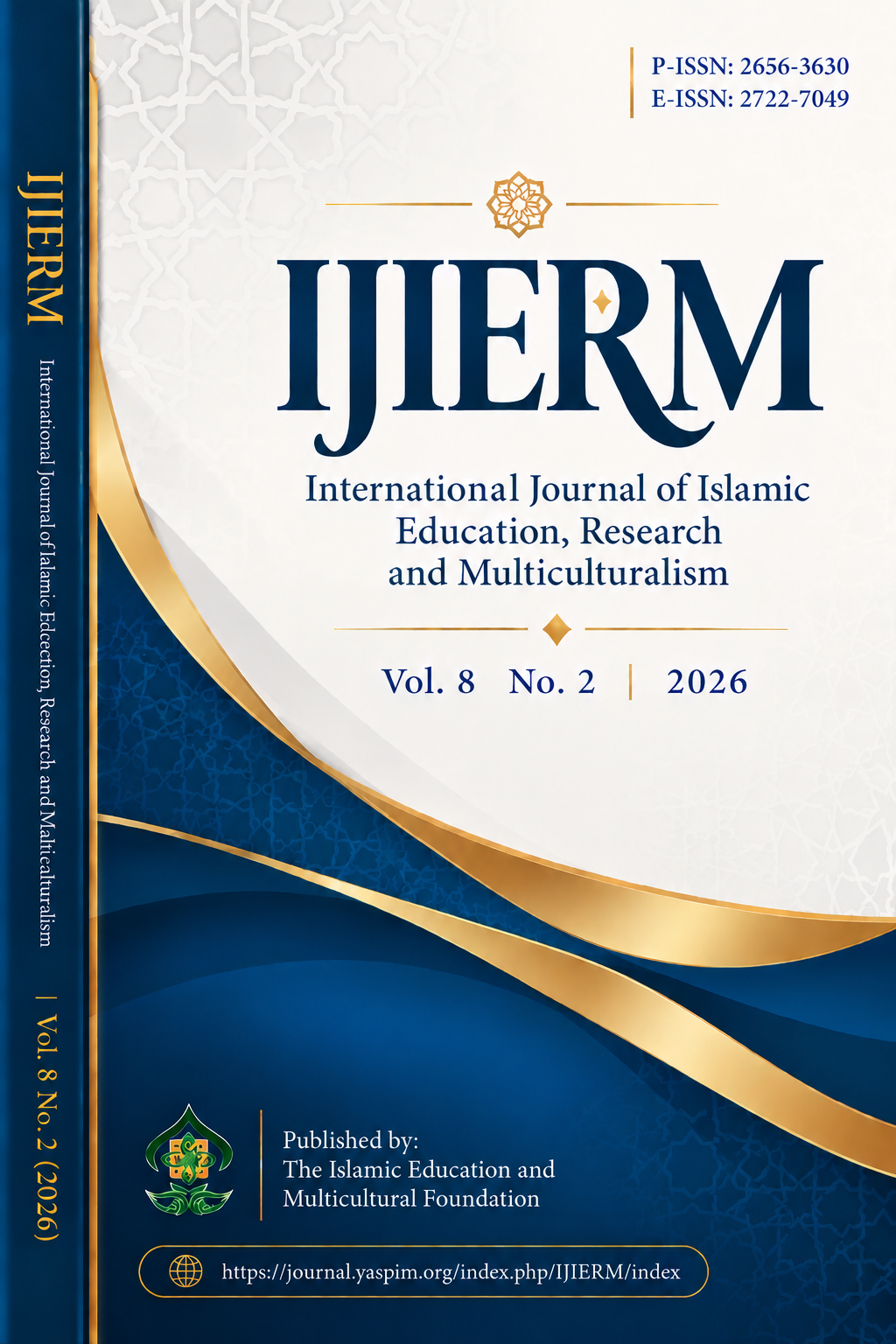
 International Journal of Islamic Education, Research and Multiculturalism (IJIERM)
Volume 8, Number 2 (2026) of IJIERM features twenty-eight scholarly articles addressing Islamic epistemology, multicultural education, religious moderation, legal reform, educational innovation, and public health. The issue reports geographical participation from four countries: Egypt, Syria, Bangladesh, and Indonesia, reflecting its international and interdisciplinary orientation. Major themes include Qur'anic knowledge integration, character education, flipped classroom instruction, Islamic school culture, and digital transformation in educational institutions. Other contributions examine religious identity on social media, Islamic banking regulation, notarial accountability, healthcare safety, and environmental health management. Further studies investigate interreligious understanding, human rights, digital communication, and institutional governance grounded in Islamic values. Collectively, these articles highlight the importance of cross-cultural scholarship, ethical educational leadership, inclusive religious perspectives, technological innovation, and evidence-based governance in responding to contemporary educational, legal, and societal challenges.
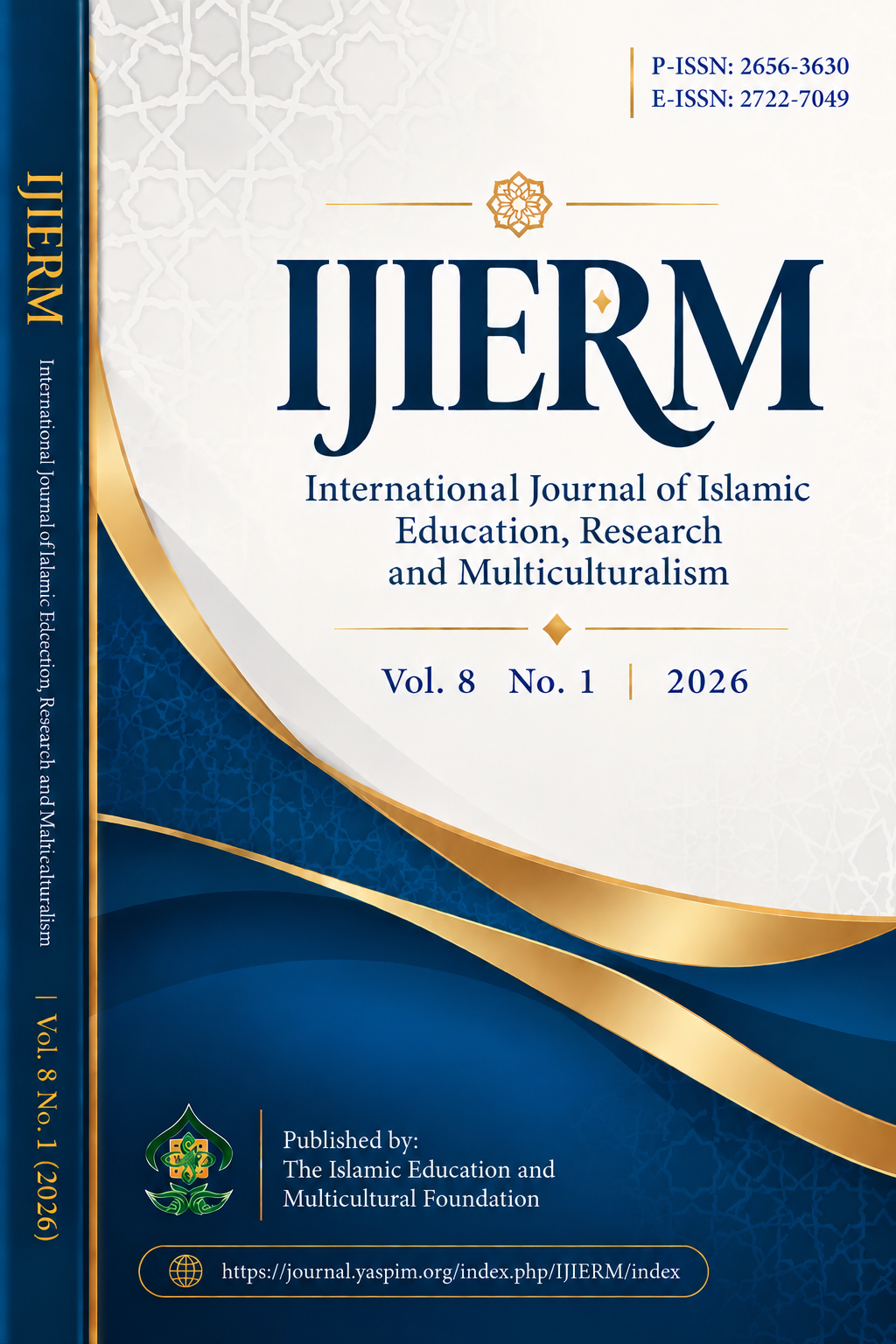 International Journal of Islamic Education, Research and Multiculturalism (IJIERM)
Volume 8, Number 1 (2026) of the International Journal of Islamic Education, Research and Multiculturalism (IJIERM) presents thirty scholarly articles examining Islamic education, religious moderation, educational leadership, environmental sustainability, legal governance, and digital transformation. The contributions investigate Qur'anic ecological ethics, inclusive education, religious character formation, literacy development, and innovative instructional strategies in Islamic schools and madrasahs. Other studies explore Qur'anic memorization, student discipline, educational marketing, parental involvement, and curriculum implementation. Legal research addresses online gambling promotion, identity-related cybercrime, and Islamic criminal law, while additional contributions examine corporate social responsibility, financial governance, and digital-era leadership. Collectively, these interdisciplinary studies emphasize the integration of Islamic ethical principles, pedagogical innovation, institutional accountability, and technological adaptation in improving educational quality, strengthening social responsibility, and promoting sustainable community development in contemporary Indonesia.
 International Journal of Islamic Education, Research and Multiculturalism (IJIERM)
Volume 7, Number 3 (2025) of IJIERM features twenty-eight scholarly articles with contributions from eighty authors across seven countries: Japan, India, Vietnam, Pakistan, Ethiopia, Libya, and Indonesia. The studies address Islamic education, multicultural perspectives, educational leadership, communication theory, legal governance, and social development. Major themes include Qur'anic communication ethics, Islamic character education, classical jurisprudence, educational supervision, and contemporary pedagogical innovation. Other contributions investigate critical theory, mass culture, digital communication, and technological transformation. Legal studies explore notarial regulation, children's rights, taxation, criminal justice, and family law. Further research examines healthcare administration, organizational training, and community communication. Collectively, these articles demonstrate IJIERM's commitment to international scholarly participation, interdisciplinary research, culturally responsive education, and the integration of ethical, legal, and technological perspectives in addressing contemporary societal challenges.
 International Journal of Islamic Education, Research and Multiculturalism (IJIERM)
Volume 7, Number 2 (2025) of IJIERM presents thirty-one scholarly articles addressing Islamic education, multiculturalism, legal reform, communication, digital transformation, and social development. The issue reports author geographical coverage across eight countries: Egypt, Italy, Thailand, Iraq, Nigeria, Vietnam, Ethiopia, and Indonesia, reflecting an increasingly international scholarly orientation. Major themes include multicultural education, Islamic intellectual reform, Qur'anic teaching, religious literacy, and curriculum innovation. Other studies investigate legal protection, land administration, notarial responsibilities, human rights, environmental governance, and public policy reform. Additional contributions examine digital communication, cybersecurity, healthcare services, cultural adaptation, and community engagement. Collectively, these interdisciplinary studies highlight the significance of international academic collaboration, inclusive education, ethical governance, technological adaptation, and legal accountability in addressing contemporary challenges and promoting sustainable development across multicultural societies.
 International Journal of Islamic Education, Research and Multiculturalism (IJIERM)
Volume 7, Number 1 (2025) of IJIERM features twenty-four scholarly articles investigating Islamic education, educational leadership, legal governance, organizational performance, economic management, and public health. The contributions explore Qur'anic educational values, Islamic character formation, Arabic language instruction, religious counseling, and school supervision. Other studies examine educational innovation through storytelling, audiovisual learning, and spiritual development in Islamic institutions. Legal research addresses restorative justice, constitutional participation, banking confidentiality, corporate social responsibility, and notarial responsibilities. Additional contributions investigate organizational culture, employee motivation, healthcare service quality, digital commerce, and environmental sustainability. The issue further considers family education and the development of professional competencies in contemporary educational settings. Collectively, these articles emphasize the integration of religious values, effective governance, educational innovation, social responsibility, and evidence-based management in advancing institutional quality and sustainable community development.
 International Journal of Islamic Education, Research and Multiculturalism (IJIERM)
Volume 6, Number 3 (2024) of IJIERM presents thirty-one scholarly articles examining Islamic education, multicultural relations, legal reform, human rights, communication, organizational management, and public health. The contributions address multicultural interactions between students and Chinese communities, Islamic character education, religious counseling, media literacy, and the protection of children's rights. Other studies investigate notarial accountability, marriage registration, land governance, financial regulations, political participation among Indigenous communities, and international humanitarian law. Further research explores organizational performance, banking competitiveness, public transportation, and experimental approaches to health sciences. The issue also examines communication strategies for addressing early marriage and public health challenges in local communities. Collectively, these studies highlight the importance of interdisciplinary dialogue, cultural inclusion, ethical governance, legal protection, and evidence-based interventions in advancing educational quality, public welfare, and sustainable social development.
 International Journal of Islamic Education, Research and Multiculturalism (IJIERM)
Volume 6, Number 2 (2024) of IJIERM publishes twenty scholarly articles exploring legal protection, Islamic finance, organizational leadership, economic development, gender perspectives, and educational management. The studies investigate religious moderation in Islamic boarding schools, gender-related interpretations of Islamic law, and the relationship between leadership, motivation, and professional performance. Other contributions address environmental, social, and governance performance, investment behavior, management accounting, and small business development. Legal research examines notarial responsibilities, land administration, electronic commerce, consumer rights, fiduciary guarantees, and legal certainty in financial transactions. Additional studies consider professional commitment among teachers, lecturers' service quality, and the relationship between organizational empowerment and institutional effectiveness. Collectively, these articles emphasize the importance of ethical governance, legal accountability, financial innovation, religious moderation, and effective educational leadership in strengthening institutional performance and sustainable socioeconomic development.
 International Journal of Islamic Education, Research and Multiculturalism (IJIERM)
Volume 6, Number 1 (2024) of IJIERM features nineteen scholarly articles addressing Islamic educational philosophy, institutional leadership, legal governance, financial management, environmental sustainability, and social inclusion. The contributions examine the ontological, epistemological, and axiological foundations of Islamic education, alongside the influence of school leadership and work motivation on teacher performance. Other studies investigate inclusive education policies, women's leadership in Islamic thought, financial literacy, and organizational service quality. Legal research explores land registration, constitutional governance, notarial responsibilities, and the protection of legal rights. Additional contributions address environmental management, agricultural biotechnology, resource diplomacy, and fisheries development. Collectively, these articles emphasize the relevance of interdisciplinary approaches, ethical leadership, educational inclusivity, institutional accountability, and sustainable resource management in responding to contemporary social, educational, economic, and legal challenges.
 International Journal of Islamic Education, Research and Multiculturalism (IJIERM)
Volume 5, Number 3 (2023) of IJIERM presents twenty-five scholarly articles examining Islamic education, legal reform, educational leadership, economic development, environmental sustainability, and social transformation. The contributions explore Islamic identity and nationalism, the transformation of Islamic educational practices in Aceh, teachers' professional identity, and the development of character assessment instruments. Other studies investigate public participation in water and sanitation programs, women's political empowerment, digital marketing, financial performance, and organizational leadership. Legal research addresses employment regulations, consumer protection, insolvency disputes, land administration, and corporate accountability. Additional contributions examine renewable energy, agricultural productivity, fisheries management, and technological innovation. Collectively, these studies demonstrate the importance of interdisciplinary research in strengthening institutional governance, educational quality, social justice, environmental responsibility, and sustainable development across diverse Indonesian and international contexts.
 International Journal of Islamic Education, Research and Multiculturalism (IJIERM)
Volume 5, Number 2 (2023) of IJIERM publishes twenty scholarly articles addressing legal governance, communication, economic development, environmental sustainability, public health, and institutional management. The contributions investigate regulatory clarity, children's rights, religious perspectives on family law, and the role of international relations in conflict resolution. Other studies examine foreign investment and economic growth in ASEAN countries, digital banking transformation, organizational performance, and innovative communication strategies. The issue also explores environmental vulnerability, sustainable aquaculture, food development, public health communication, and community participation in development. Additional contributions discuss digital privacy, data protection, and the legal responsibilities of public institutions. Collectively, these interdisciplinary studies highlight the significance of responsible governance, technological innovation, social protection, and evidence-based policy development in addressing contemporary challenges across education, economy, law, health, and society.
 International Journal of Islamic Education, Research and Multiculturalism (IJIERM)
Volume 5, Number 1 (2023) of IJIERM features fifteen scholarly articles exploring Islamic education, multiculturalism, religious identity, educational management, public health, and socioeconomic development. The issue includes contributions from scholars affiliated with institutions in Indonesia and the United States, reflecting international academic participation. Major themes include multicultural political communication, Islamic educational values, religious moderation, social harmony, and the relationship between Malay cultural traditions and Islamic identity. Other studies investigate Islamic boarding school leadership, early childhood learning, educational difficulties, business development based on Islamic ethics, and the productivity of traditional workers. Additional contributions address maternal health, educational finance, and human capital development. Collectively, these articles emphasize the relationship between cultural diversity, educational transformation, ethical governance, and sustainable social development, strengthening IJIERM's interdisciplinary engagement with contemporary educational and societal challenges.
 International Journal of Islamic Education, Research and Multiculturalism (IJIERM)
Volume 4, Number 3 (2022) of IJIERM presents six scholarly articles investigating multicultural education, institutional management, media representation, religious communication, information behavior, and academic integrity. The contributions examine the representation of feminism in science fiction films through semiotic analysis and the relationship between multicultural societies and educational institutions. Other studies assess educational management effectiveness in Islamic senior secondary schools and explore the application of tabayyun principles in information and communication practices among major Islamic organizations in Jambi. The issue further investigates public library users' information needs and the relationship between students' backgrounds, academic integrity, and academic dishonesty. Collectively, these studies highlight the significance of culturally inclusive educational environments, responsible communication, effective institutional governance, and ethical academic practices in developing critical awareness and strengthening social relations in contemporary society.
 International Journal of Islamic Education, Research and Multiculturalism (IJIERM)
Volume 4, Number 2 (2022) of IJIERM features six scholarly articles addressing Islamic multicultural education, religious moderation, character development, cultural heritage preservation, legal perspectives, and adolescent psychology. The contributions examine the integration of moderate Islamic values into elementary school character education and the role of Islamic boarding school networks in promoting multicultural understanding and sustaining peace in Aceh. Other studies investigate religious moderation as a foundation for harmonious social relations and community initiatives to preserve historical heritage sites. The issue also explores the legal implications of conjugal visitation for incarcerated individuals within Indonesia's correctional system and adolescent sexual attitudes through psychoanalytic perspectives. Collectively, these articles emphasize the importance of religious tolerance, culturally responsive educational practices, ethical legal frameworks, and community participation in fostering peaceful coexistence and strengthening social responsibility within multicultural societies.
 International Journal of Islamic Education, Research and Multiculturalism (IJIERM)
Volume 4, Number 1 (2022) of the International Journal of Islamic Education, Research and Multiculturalism (IJIERM) presents six scholarly articles examining Islamic education, school governance, religious character formation, cultural participation, and business management. The contributions investigate contextual teaching and learning strategies in Islamic religious education, the role of school committees in improving institutional effectiveness, and the acceptance of interfaith values among non-Muslim students. Other studies explore strategies for cultivating religious character in schools and the relationship between service quality and visitor satisfaction in cultural institutions. The issue also addresses corporate social responsibility, brand attitudes, and customer revisit intentions in the hospitality industry. Collectively, these studies emphasize the importance of inclusive educational practices, effective institutional leadership, ethical character development, and socially responsible organizational management in strengthening educational quality and broader community development.
 Vol 3 No 3 (2021)
Volume 3, Number 3 (2021) of IJIERM presents six scholarly articles involving fourteen authorship entries, addressing educational freedom, Islamic educational thought, school leadership, learning strategies, and development communication. The contributions examine the conceptual foundations of Merdeka Belajar and the implications of intellectual freedom for contemporary Islamic education. Other studies investigate principals' planning strategies for improving teacher productivity and the relationship between instructional approaches, logical thinking abilities, and students' achievement in Islamic religious education and ethics. Further research explores the effectiveness of concept mapping, differences in students' thinking styles, and instructional strategies for improving educational outcomes. The issue also examines government communication practices in disseminating development innovations in North Sumatra. Collectively, these studies emphasize educational autonomy, evidence-based instructional innovation, professional leadership, and effective public communication in advancing educational quality and social development.
 Vol 3 No 2 (2021)
Volume 3, Number 2 (2021) of IJIERM publishes five scholarly articles featuring eleven displayed authorship entries, examining Islamic education, multicultural learning, adolescent character development, educational leadership, and Islamic economic ethics. The contributions investigate students' motivations for selecting Islamic boarding schools as institutions for Arabic language learning and the development of social affection in cultivating moral character among young people. Another study explores Islamic legal perspectives on weighing practices in palm oil trading, emphasizing fairness and ethical accountability in commercial transactions. Further contributions address multicultural approaches to Islamic religious instruction and the role of teachers as agents of educational transformation. Collectively, these studies demonstrate the interconnectedness of religious education, ethical economic practices, culturally inclusive pedagogy, and professional educational leadership in strengthening students' character, promoting social responsibility, and supporting constructive relationships within diverse communities.
 Vol 3 No 1 (2021)
Volume 3, Number 1 (2021) of IJIERM features five scholarly articles involving eleven authorship entries, offering interdisciplinary perspectives on Islamic education, Arabic language pedagogy, educational achievement, and culturally grounded governance. The contributions investigate the application of the Think-Pair-Share method to improve students' mastery of Arabic morphology in Islamic boarding schools. Another study examines principles of good governance from the perspectives of Malay customary traditions and the Qur'an, highlighting the relationship between indigenous cultural values and Islamic ethical principles. Additional research compares students' academic achievement in Islamic religious education across different primary educational backgrounds. The issue also explores teachers' strategies for overcoming Arabic language learning difficulties and university students' perceptions of autonomous learning. Collectively, these articles emphasize innovative pedagogy, learner independence, educational equity, and the integration of Islamic intellectual traditions with culturally responsive educational practices.
 Vol 2 No 3 (2020)
Volume 2, Number 3 (2020) of IJIERM presents six scholarly articles involving twelve authorship entries, focusing on Arabic language education, digital learning, Islamic educational management, and religious scholarship. The contributions examine the implementation of online Arabic instruction during the new normal period, teachers' experiences in overcoming technological and pedagogical challenges, and instructional strategies for shaping students' learning behavior. Other studies investigate Arabic learning styles among secondary school students and the importance of appropriate teaching approaches in enhancing language proficiency. The issue also explores the interpretation of hadith concerning sutrah and the internalization of curriculum management principles in Islamic elementary schools and madrasahs. Collectively, these studies highlight the need for pedagogical adaptability, effective educational leadership, and innovative instructional practices that integrate Islamic educational traditions with contemporary technological developments.
 Vol 2 No 2 (2020)
Volume 2, Number 2 (2020) of IJIERM publishes five scholarly articles involving eleven authorship entries, representing interdisciplinary research on Islamic history, local cultural traditions, religious counseling, instructional practices, and family education. The studies examine the Islamization process and socioeconomic development of Malay communities in Jambi, alongside the role of Islam Nusantara in preserving cultural heritage and strengthening national identity. Additional contributions investigate the philosophical foundations of Islamic counseling and the effectiveness of recitation-based instructional methods in fostering students' creativity in Islamic religious education. Another article explores family education as a foundational mechanism for preventing intolerance and strengthening religious understanding. Together, these contributions highlight the relationship between Islamic intellectual traditions, cultural identity, educational innovation, and social cohesion, demonstrating the continuing relevance of religious values in addressing contemporary educational and societal challenges.
 Vol 2 No 1 (2020)
Volume 2, Number 1 (2020) of the International Journal of Islamic Education, Research and Multiculturalism (IJIERM) features five scholarly articles involving eight authorship entries, addressing Islamic education, multicultural values, religious moderation, Arabic language learning, and English language pedagogy. The contributions examine fundamental principles of materials development for English for Specific Purposes, highlighting the importance of needs analysis and contextually relevant instructional resources. Other studies investigate challenges associated with Arabic language learning environments, multicultural curriculum development in Islamic education, and the reconstruction of pluralism within Islamic jurisprudence. The issue also explores the internalization of multicultural values through religious culture in Islamic elementary schools. Collectively, these studies emphasize the importance of culturally responsive curricula, inclusive religious interpretation, effective language instruction, and educational practices that cultivate tolerance, mutual understanding, and respect for diversity within contemporary Muslim societies.
 Vol 1 No 1 (2019)
The inaugural issue of the International Journal of Islamic Education, Research and Multiculturalism (IJIERM) presents five scholarly articles authored by five researchers affiliated with four higher education institutions across three Indonesian provinces: East Java, North Sumatra, and Jambi. The contributions address interdisciplinary perspectives on Islamic education, multiculturalism, English language instruction, and religious counseling. Major themes include social interaction in multicultural educational environments, religious inclusivism and exclusivism, the development of reading comprehension through sensory imagery and questioning strategies, and the effectiveness of English grammatical instruction. Another study examines the integration of religious values into educational counseling practices. Collectively, these articles establish IJIERM's initial academic commitment to promoting inclusive education, strengthening pedagogical competence, encouraging intercultural understanding, and integrating religious and ethical principles into educational practices and broader social development.
IJIERM Indexed By:











INTERNATIONAL JOURNAL OF ISLAMIC EDUCATION, RESEARCH, AND MULTICULTURALISM
The Islamic Education and Multicultural Foundation
Jl. Rambutan, Caru Hamlet, Pendem Village, District Junrejo, Postal Code 65321, Batu City, East Java, Indonesia.

This work is licensed under a Creative Commons Attribution-NonCommercial-ShareAlike 4.0 International License.